You’re 34 weeks pregnant!
Congratulations, you’ve got just about 2 months left before you get to meet your baby! At 34 weeks pregnant, your baby is the size of a bag of sugar. Your little one will be gaining weight very quickly in the next few weeks. Its eyes are open, nails are formed, and hair is beginning to grow.
Right now, what you eat is very important, so be sure you’re taking in the right nutrients through healthful foods. You may also feel as though you’re ready for baby to be born as it seems like you’ve been pregnant forever. Rest when you can, and realize baby will be here before you know it.
Pregnancy symptoms at 34 weeks
Your ultrasound
If you’re having twins, chances are your doctor will order an ultrasound to check on your babies. Your doctor will also be checking the baby’s position. They’ll be able to determine whether or not baby is upside down or presenting in a breech position.
Your pregnant belly at 34 weeks

You may have noticed in the last few weeks the development of stretch marks. While they may seem very pronounced now, after you give birth they could lighten and diminish in size.
Pregnancy tips at 34 weeks
- If you haven’t already done so, consider submitting a birth plan to your doctor; keep a copy in your hospital bag as well.
- If you’re noticing that incontinence is an issue, consider purchasing some maternity incontinence pads to keep more comfortable.
- Baby can hear at this stage of pregnancy, so by all means sing and talk to your child. Some parents read a story to their child at this stage and say they have then noticed baby reacting and interacting with the same story once they’re born.
Your pregnancy checklist at 34 weeks
- If your doctor hasn’t already done so, inquire about a Group B Streptococcus (GBS) test. The GBS will test whether you carry this bacteria on your body which while not harmful to you, can make baby sick during delivery. If your test is positive, your doctor will prescribe antibiotics.
What are you eating for you and your baby?
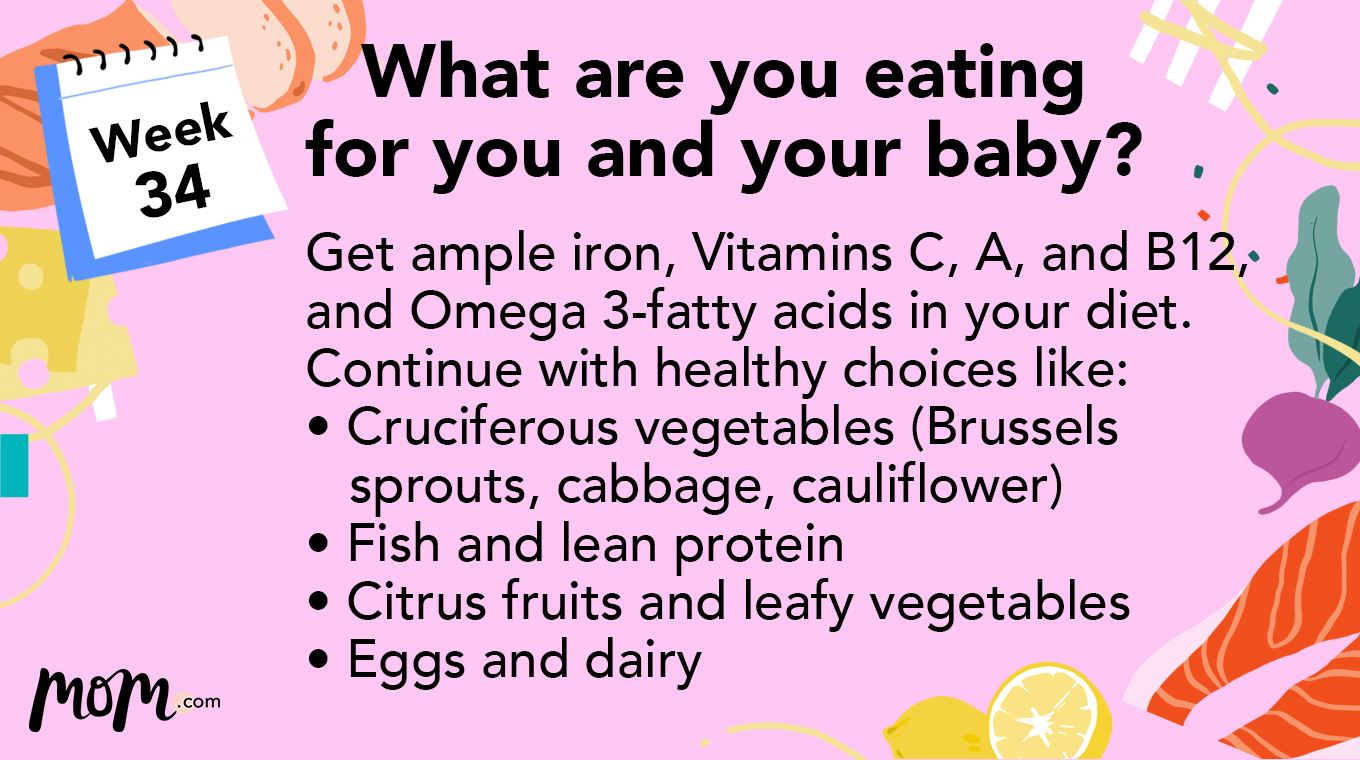
In your third trimester, your baby is growing quickly and relies on the nutrients you provide to grow healthy and strong. Your diet should be high in iron (from food or a supplement if your doctor has suggested one) Vitamin C, Vitamin A, B12, and foods rich in Omega 3-fatty acids (DHA) like salmon.
Round out your diet with healthy options like these:
- Cruciferous vegetables (Brussels sprouts, cabbage, cauliflower)
- Fish and lean protein
- Citrus fruits and leafy vegetables
- Eggs and dairy
When to call your doctor
At this stage of your pregnancy, anything that seems off or just not right may warrant a call to your doctor. Often just getting reassurance from the staff nurse when you call your doctor’s office is enough to set your mind at ease.
Plus, letting them know what’s going on is helpful, in case you run into issues later on and need to go in to be seen. Even if you’re not sure you’re experiencing a serious symptom, making a phone call won’t do any harm so don’t feel like you’re bothering them when you call.
Pregnant women are at a higher risk of illness as a result of a COVID-19 diagnosis and those diagnosed with COVID-19 have an increased chance of delivering pre-term (before 37 weeks), according to the Centers for Disease Control and Prevention (CDC).
Note: If you are visiting your doctor during COVID, be sure to confirm that the doctor’s office is following COVID protocols as indicated by the CDC.